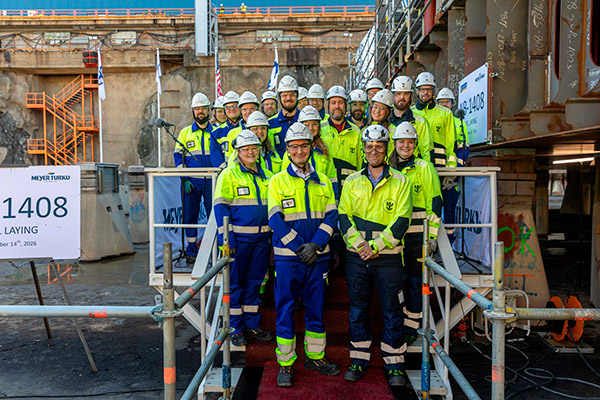
Construction on Royal Caribbean’s fifth Icon Class vacation begins at Meyer Turku shipyard
The first block of the fifth Icon Class ship was officially placed and sealed with good fortune at the Meyer Turku shipyard in Finland

The first block of the fifth Icon Class ship was officially placed and sealed with good fortune at the Meyer Turku shipyard in Finland

CM Technologies (CMT) has introduced two new instruments for measuring ferrous metal debris in the drained cylinder oil of marine engines, extending the electromagnetic monitoring options available for detecting engine component wear onboard ship.
The float-out milestone kicks off the next stage of construction for the fourth ship in the Icon Class lineup debuting August 2027 in Miami.

New operational technology (OT) security services and technology solutions, enabled by the Marlink Possibility Platform, just launched. This offering is supported 24/7 by global expert monitoring teams, helping strengthen operational resilience for ocean and land-based industries.
SMM 2026 in Hamburg highlighted a changing set of priorities for the maritime industry. While decarbonisation and energy efficiency remain strategic goals, maritime security, resilience and faster deployment of existing technologies increasingly shaped the agenda. More than 50,000 participants from 134 countries attended the four-day event, with around 2,300 exhibitors from 66 countries.
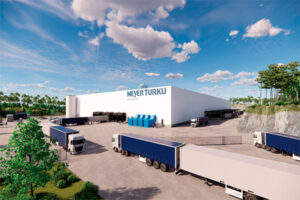
Logian and Meyer Turku have signed a letter of intent to build an approximately 20,000 sqm logistics centre near the Turku shipyard area, in Blue Industry Park. Meyer Turku will be the project’s anchor tenant. The logisticscentre is targeted to be operational by the end of 2028.
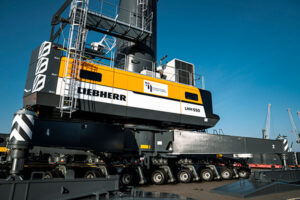
Delivered within an exceptionally short three-month timeframe, the crane underlines Liebherr’s
ability to align engineering, production and commissioning with demanding project schedules
while providing an integrated package that supports operational readiness from day one through
on-site assistance, tailored container handling equipment and long-term service assurance.
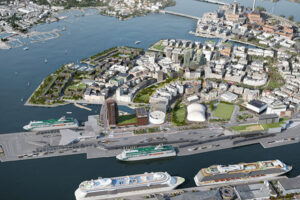
The Port of Helsinki and Terramare Oy have signed an agreement to refurbish the LJ6 quay at the West Harbour. The contract, worth approximately €23.9 million, forms part of the extensive redevelopment of the West Harbour, which aims to concentrate ferry traffic to Tallinn in Jätkäsaari.
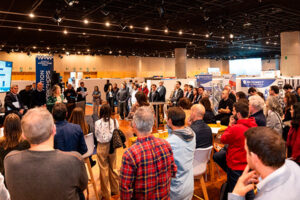
World Maritime Week 2027 is set to gather professionals, companies, associations, and institutions from across the maritime industry on 9 and 10 March at Bilbao Exhibition Centre. The event reaffirms its position as the premier meeting point for sharing knowledge, driving business opportunities, and fostering strategic partnerships within the sector.
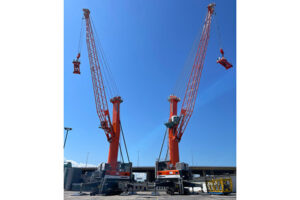
For the customer, the value lies in a solution tailored to the berth, aligned with an existing
Liebherr fleet and backed by extended warranty for key structural elements. This combination supports predictable lifecycle planning, dependable uptime and a measured path towards future terminal modernisation.
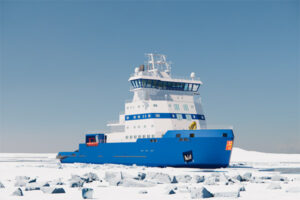
Helsinki Shipyard (DNY Finland Oy) has been selected to build Finland’s new icebreaker called Aino. The procurement by the Finnish Transport Infrastructure Agency marks the beginning of a new generation of Finland’s icebreaker fleet.
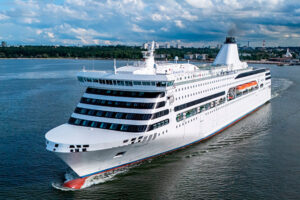
AS Tallink Grupp and the Organizing Committee of the Mediterranean Games of Taranto 2026 reached a charter agreement for the cruise ferry Romantika. The ship will head to Italy, where she will provide accommodations and catering for the participants of the XX Mediterranean Games. Romantika will be chartered out with a technical and service crew.
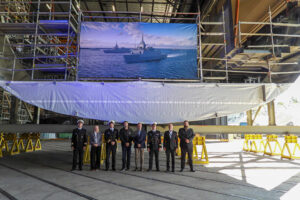
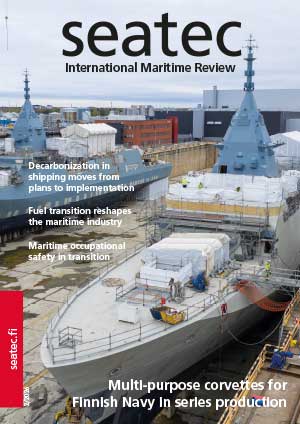
At the Rauma Shipyard, one of the most important stages in the construction of a naval vessel started on Tuesday, 4 August, with the keel-laying of the fourth multi-purpose corvette of Pohjanmaa class. This symbolically important milestone marks the beginning of the hull assembly stage at full pace.
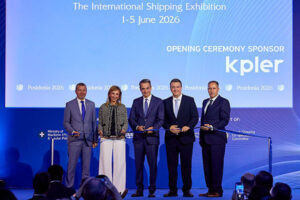
Posidonia 2026 set a new benchmark for the global maritime industry, bringing together the world’s leading shipping stakeholders at a pivotal moment for international trade.
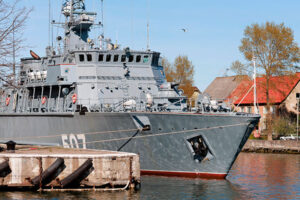
MS&D Conference & Expo 2026 Brings Together Politics, Navies and Industry in Hamburg.
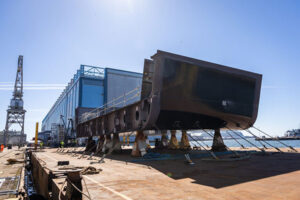
Construction of the Polar Max icebreaker for Canada, one of the heaviest icebreakers ever built, began in August 2025 at Helsinki Shipyard and Sata Shipbuilding. Hull assembly is now commencing in Helsinki, after which the completed hull will be finalized at Davie Shipbuilding’s yard in Canada.
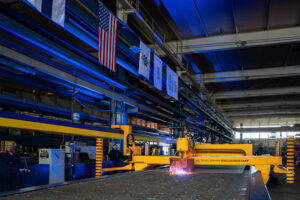
Sata Shipbuilding received its first steel rail delivery to the Mäntyluoto shipyard in more than a decade on Thursday, June 25, as a 16-car train from SSAB’s Raahe steel mill arrived carrying approximately 800 tonnes of steel plates.
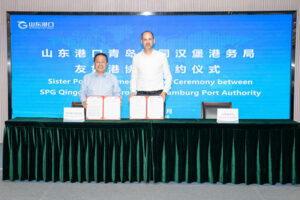
The Hamburg Port Authority (HPA) and SPG Qingdao Port Group signed a Port Partnership Agreement in Qingdao on 23 June. The agreement is designed to strengthen the relationship between the two ports and further intensify the exchange of expertise and best practices. Both parties aim to deepen their cooperation, particularly in the areas of port planning, sustainability and intermodal transport.
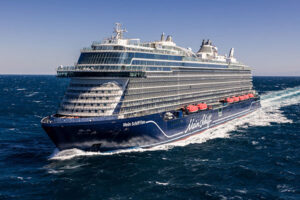
Fincantieri and TUI Cruises, a joint venture between TUI AG and Royal Caribbean Cruises, celebrated the delivery of “Mein Schiff Flow” at the

Valletta Cruise Port Ltd is pleased to announce the signing of a Build, Operate and Transfer (BOT) agreement with Valletta Bridge Ltd for the restoration, redevelopment and operation of the historic Power Station building, marking another important milestone in the continued regeneration of the Grand Harbour area.
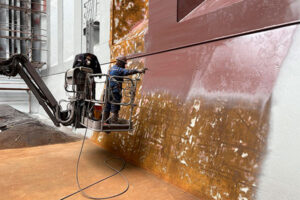
Steelpaint GmbH, the German manufacturer of high-performance single-component moisture cure polyurethane (MCPU) coatings, has completed a test coating on MUR Shipping’s 63,000dwt bulk carrier African Bari Bird.
CM Technologies (CMT) has introduced two new instruments for measuring ferrous metal debris in the drained cylinder oil of marine engines, extending the electromagnetic monitoring options available for detecting engine component wear onboard ship.
The float-out milestone kicks off the next stage of construction for the fourth ship in the Icon Class lineup debuting August 2027 in Miami.
New operational technology (OT) security services and technology solutions, enabled by the Marlink Possibility Platform, just launched. This offering is supported 24/7 by global expert monitoring teams, helping strengthen operational resilience for ocean and land-based industries.
SMM 2026 in Hamburg highlighted a changing set of priorities for the maritime industry. While decarbonisation and energy efficiency remain strategic goals, maritime security, resilience and faster deployment of existing technologies increasingly shaped the agenda. More than 50,000 participants from 134 countries attended the four-day event, with around 2,300 exhibitors from 66 countries.
Logian and Meyer Turku have signed a letter of intent to build an approximately 20,000 sqm logistics centre near the Turku shipyard area, in Blue Industry Park. Meyer Turku will be the project’s anchor tenant. The logisticscentre is targeted to be operational by the end of 2028.
Delivered within an exceptionally short three-month timeframe, the crane underlines Liebherr’s
ability to align engineering, production and commissioning with demanding project schedules
while providing an integrated package that supports operational readiness from day one through
on-site assistance, tailored container handling equipment and long-term service assurance.
The Port of Helsinki and Terramare Oy have signed an agreement to refurbish the LJ6 quay at the West Harbour. The contract, worth approximately €23.9 million, forms part of the extensive redevelopment of the West Harbour, which aims to concentrate ferry traffic to Tallinn in Jätkäsaari.
World Maritime Week 2027 is set to gather professionals, companies, associations, and institutions from across the maritime industry on 9 and 10 March at Bilbao Exhibition Centre. The event reaffirms its position as the premier meeting point for sharing knowledge, driving business opportunities, and fostering strategic partnerships within the sector.
For the customer, the value lies in a solution tailored to the berth, aligned with an existing
Liebherr fleet and backed by extended warranty for key structural elements. This combination supports predictable lifecycle planning, dependable uptime and a measured path towards future terminal modernisation.
Helsinki Shipyard (DNY Finland Oy) has been selected to build Finland’s new icebreaker called Aino. The procurement by the Finnish Transport Infrastructure Agency marks the beginning of a new generation of Finland’s icebreaker fleet.
AS Tallink Grupp and the Organizing Committee of the Mediterranean Games of Taranto 2026 reached a charter agreement for the cruise ferry Romantika. The ship will head to Italy, where she will provide accommodations and catering for the participants of the XX Mediterranean Games. Romantika will be chartered out with a technical and service crew.
At the Rauma Shipyard, one of the most important stages in the construction of a naval vessel started on Tuesday, 4 August, with the keel-laying of the fourth multi-purpose corvette of Pohjanmaa class. This symbolically important milestone marks the beginning of the hull assembly stage at full pace.
Posidonia 2026 set a new benchmark for the global maritime industry, bringing together the world’s leading shipping stakeholders at a pivotal moment for international trade.
MS&D Conference & Expo 2026 Brings Together Politics, Navies and Industry in Hamburg.
Construction of the Polar Max icebreaker for Canada, one of the heaviest icebreakers ever built, began in August 2025 at Helsinki Shipyard and Sata Shipbuilding. Hull assembly is now commencing in Helsinki, after which the completed hull will be finalized at Davie Shipbuilding’s yard in Canada.
Sata Shipbuilding received its first steel rail delivery to the Mäntyluoto shipyard in more than a decade on Thursday, June 25, as a 16-car train from SSAB’s Raahe steel mill arrived carrying approximately 800 tonnes of steel plates.
The Hamburg Port Authority (HPA) and SPG Qingdao Port Group signed a Port Partnership Agreement in Qingdao on 23 June. The agreement is designed to strengthen the relationship between the two ports and further intensify the exchange of expertise and best practices. Both parties aim to deepen their cooperation, particularly in the areas of port planning, sustainability and intermodal transport.
Fincantieri and TUI Cruises, a joint venture between TUI AG and Royal Caribbean Cruises, celebrated the delivery of “Mein Schiff Flow” at
Valletta Cruise Port Ltd is pleased to announce the signing of a Build, Operate and Transfer (BOT) agreement with Valletta Bridge Ltd for the restoration, redevelopment and operation of the historic Power Station building, marking another important milestone in the continued regeneration of the Grand Harbour area.
Steelpaint GmbH, the German manufacturer of high-performance single-component moisture cure polyurethane (MCPU) coatings, has completed a test coating on MUR Shipping’s 63,000dwt bulk carrier African Bari Bird.